What sparked your passion to study positive psychology?
I had been teaching in TAFE and saw increasing numbers of students and educators experiencing emotional exhaustion under growing sector demands. I began integrating self-care, gratitude and mindfulness practices into my teaching where I could. Exploring wellbeing led me to positive psychology. Around the same time, Belonging, Being and Becoming (DEEWR, 2009) affirmed to me that wellbeing principles should apply equally to educators as to children.
Why do educators need high levels of wellbeing?
Educators need high levels of wellbeing because children’s learning and development depend on calm, responsive and consistent relationships with regulated adults. Educator wellbeing directly supports secure attachment, co-regulation, and the development of executive functions – particularly for children experiencing vulnerability or disadvantage.
What wellbeing challenge do you see most often in ECE settings?
The most common wellbeing challenge I see in ECE settings is chronic emotional overload. Educators are managing high relational, cognitive and regulatory demands with limited time, support and recovery opportunities. This leads to emotional exhaustion, reduced capacity for co-regulation, and an increased risk of burnout, absenteeism and workforce attrition.
How does a thriving educator influence the emotional climate of a centre?
A thriving educator brings calm, attunement, emotional availability and stability into the space. Their regulation supports collaborative approaches to support co-regulation. Their presence fosters safety and belonging. Their consistency builds trust, where learning flourishes and wellbeing becomes part of the culture of the service.
What’s one leadership behaviour that transforms a centre’s culture?
This is a hard call. I would have to share this between being calm, being curious and being compassionate. Responding and role-modelling these build’s psychological safety and psychological capital – which are important foundations of a positive culture.
What’s one wellbeing habit that can instantly lift an educator’s day?
I think one of the simplest and easiest wellbeing habits to instantly lift an educator’s day is smiling. Smiling activates neural pathways linked to positive emotion, connection and stress reduction. Even brief, genuine smiles can shift mood, signal safety, strengthen relationships, and positively influence the emotional climate for educators, children and families.
About Jo Maloney
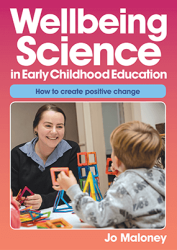
Jo Maloney is a consultant who supports leaders, educators and organisations to reach their positive potential. She has a Masters of Applied Positive Psychology, a Diploma of Positive Psychology and Wellbeing and a Bachelor of Teaching (Early Childhood). Jo has worked in the early childhood and community sectors for 30 years in various roles including director, teacher, TAFE teaching, mindfulness facilitator, and providing trauma-informed social-emotional learning support for children and educators. Jo believes that high-quality education and care originates from educators who possess high levels of wellbeing to enable them to support each other, children, families and their communities to thrive.