Congratulations on Survive Aotearoa being named a finalist in the 2026 New Zealand Book Awards for Children and Young Adults. How does it feel to see the book receiving this recognition?
Thanks. It feels a bit like Christmas actually – it’s both thrilling and hard to believe all at the same time. It really gives me a warm fuzzy feeling when I think that being named a finalist in the awards means other people must feel the same way about the stories I chose to write. I thought they were amazing stories, and now I know other people do too.
Survive Aotearoa encourages young people to think like explorers and problem-solvers. Do you see any connections between the curiosity and inquiry in that book and the approach you've taken with your Story Seekers books?
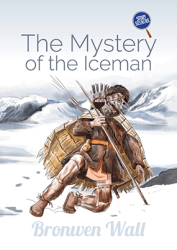
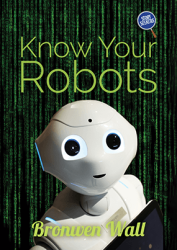
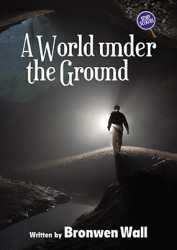
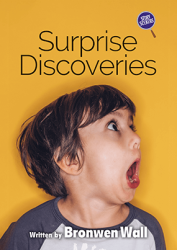
Absolutely! All the stories I’ve written about in both Survive Aotearoa and for the Story Seekers series are true stories. In fact, I find it hard to even call them “stories” because it makes them seem like they might be made up.
I think of them more as retellings. They are me retelling the experiences of others, based on the information I’ve found during my research. This is an important point – everyone will have their own experience of the same situation. Whenever I research an event – whether it’s for Survive Aotearoa or for Story Seekers, I find there are different sides to that event. It’s kind of like a jigsaw puzzle that’s been dumped on a table in front of me. I have to sort out all the pieces and place them so they fit together comfortably. Once I do that, if I do it well enough, the whole sequence of events will come together for both me and the reader, like a journey that’s unfolding as I write it and as the reader reads it.
Whether children are exploring New Zealand's landscapes in Survive Aotearoa or exploring ideas through Story Seekers, why do you think curiosity is such an important skill for young people to develop?
Curiosity is a brilliant thing. It makes us get out there and experience life. It opens the doors to learning and experiencing and growing. It’s like anything, the more you practise being curious, the better you get at it. Once you get used to being curious, it can lead you meeting interesting people, having interesting experiences, traveling to interesting places and learning to appreciate our world more.
What makes a great story prompt or inquiry question for primary-aged learners?
Oh, there are lots of great prompts younger people can be thinking about while they’re reading these retellings!
- Why might the characters have done what they did?
- What might the characters have been feeling while certain things were happening?
- How do you think you’d feel if you were the character?
- Can you think of any other, different ways you might have solved the problem?
If a teacher could take just one thing from your Story Seekers books, what would you want it to be?
That. All. These. Stories. Are. True! That’s what’s incredible about non-fiction writing, don’t you think? What is it they say: “Fact is stranger than fiction”? It never ceases to amaze me how fascinating non-fiction can be. So, I guess I would say, please don’t dismiss the non-fiction books as dry and boring – they can be every bit as gripping as fiction.
You live among the trees in Wellington – does your writing ever get interrupted by nature?
Yes, a lot! There is a big miro tree outside my window. It sways in the wind all the time – because Wellington is such a windy place. Sometimes kākā fly in and sit on its branches. The kākā often fly in flocks, and they all come to sit in the branches for a few minutes to squawk together … loudly. It’s like they’re telling each other about exciting things they’ve noticed on their flight to the tree. Perhaps kākā are curious story tellers like us!
If you could spend a day exploring anywhere in Aotearoa for your next writing project, where would you go and why?
Hmmm, that’s a tough one because there are so many interesting places in Aotearoa. I rode the length of the country on a bicycle earlier this year. It made me want to find out more about the kauri forests of Northland, as well as the Māori trading routes across the Alps and the gold mining areas around Otago. And then there’s Rakiura Stewart Island with all its fisher folk, Māori history and amazing conservation projects. Now, that’s a place worth spending a while exploring if ever I’ve seen one!
About Bronwen Wall
Bronwen writes and edits full time from her home among the trees in hilly Wellington, New Zealand. She has written for the New Zealand Ministry of Education’s Ready to Read, Junior Journal, School Journal and Connected series. Her non-fiction children’s book Explore! Aotearoa, about incredible New Zealand explorers, won a Storylines Notable Book Award and was a finalist in the New Zealand Book Awards for Children & Young Adults in 2018, and her new title, Survive Aotearoa is a finalist in the 2026 New Zealand Book Awards for Children & Young Adults. When Bronwen isn’t writing, she is often out exploring herself, looking for more information for her next piece of writing.