There is endless information on the upcoming changes to the EYLF curriculum framework for early childhood education (ECE). It is now the role of educators to implement it. Just how do you do this? What teaching strategies can educators use to promote EYLF Learning Outcomes?
What are the five EYLF Learning Outcomes?
The Early Years Learning Framework (EYLF) Learning Outcomes lay out the expectations for children’s learning and development. They combine with the other elements of the framework – Vision, Principle and Practices – to guide curriculum design and assessment.
The EYLF Learning Outcomes are:
- Learning Outcome 1 – Children have a strong sense of identity
- Learning Outcome 2 – Children are connected with and contribute to their world
- Learning Outcome 3 – Children have a strong sense of well-being
- Learning Outcome 4 – Children are confident and involved learners
- Learning Outcome 5 – Children are effective communicators
Children’s learning is ongoing, and each child will progress towards the Learning Outcomes in different and equally meaningful ways. Learning is not always predictable and linear.
Australian Government Department of Education, 2022, pg. 29
This statement within the EYLF is a significant one. It acknowledges that children vary in their capabilities and paces of learning. They learn in a variety of ways.
The teacher’s role is to use their experience and knowledge of teaching practices to guide children along their individual pathways.

What teaching practices can educators use to promote EYLF Learning Outcomes?
Professional development
While professional development is about teachers’ learning, the intended aim is to better meet children’s needs.
Teaching as inquiry is a powerful form of professional development. It allows ECE educators to reflect on the effectiveness of their teaching strategies. Thus, educators learn how best to adapt their practices to guide children towards Learning Outcomes.
Teaching inquiry stems from an issue, question or challenge teachers have about their children’s learning. Next, educators engage in teacher inquiry using the “spiral of inquiry”:
- Scanning
- Focusing
- Developing a hunch
- Professional learning
- Taking action
It is important to see teaching inquiry as a professional collaboration.
Teaching as inquiry is an example of a teaching practice, which can apply to a single or several EYLF Learning Outcomes. It depends on the issue and strategies for enacting change.
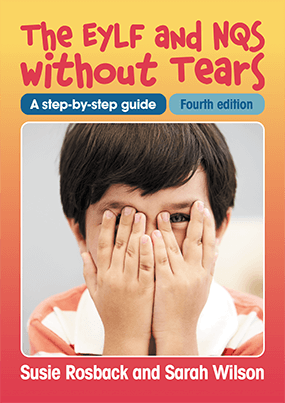
Suggested teaching resource: The EYLF and NQS without Tears
Cultural responsiveness
When ECE educators are culturally responsive, they respect multiple cultural ways of knowing, doing and being.
A study (Mitchell et al., 2015) said promoting a first language and cultural practices approach in ECE settings is the basis for good communication, learning and development. It is about creating a learning environment where children are free to use their own funds of knowledge.
Funds of knowledge are children’s individual, family and community ways of being, belonging and becoming.
Culturally responsive practices include:
- Using a few key phrases from the children’s native language daily, e.g., when greeting them.
- Creating culturally safe places where children can share stories about their histories and culture. This could involve incorporating cultural artefacts (e.g., dress-up materials) within the learning environment.
- Forming partnerships with parents, family and the community. For example, incorporate family and community texts into learning experiences.
Cultural responsiveness is important for installing a strong sense of identity in children, Learning Outcome 1.
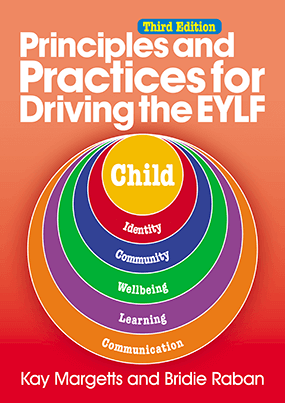
Suggested teaching resource: Principles and Practices for Driving the EYLF
Digital technology and media
There are countless digital technologies and media available today as early childhood education resources.
Here at Essential Resources, we provide our teaching resources as e-books to be displayed on your device of choice. You can even book your class into our Online Theatre.
Digital tools allow children to share and communicate information. Additionally, they help children connect and contribute to the world differently.
An educator’s role is to support children to understand the technologies they encounter. Preferably, focus on the purpose of the technology, instead of explaining it as a tool. For example, see it as a way to connect with an absent friend.
Teachers also play a vital part in ensuring children use digital technologies in healthy and safe ways.
Digital technology and media practices involve:
- Using technology to find answers and questions and document discoveries.
- Integrating technologies into children’s multimodal play experiences and projects.
- Using dance mats to teach children to coordinate their movements in time with the music.
Putting technology in the hands of children does come with caveats.
Not all digital technologies are created equal. Select technologies that promote the Principles and Practices of the EYLF. For example, use tools that favour content creation over content consumption.
Incorporating digital technologies and media into your teaching practices will aid children to become confident learners (Learning Outcome 4) and effective communicators (Learning Outcome 5).
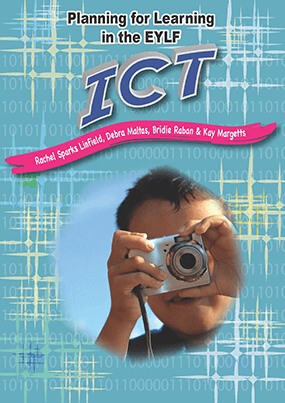
Suggested teaching resource: Planning for Learning: ICT

This is by no means a full list of teaching practices educators can utilise to promote the EYLF Learning Outcomes. Regardless, it does illustrate two points.
Firstly, a single teaching practice can promote several EYLF Learning Outcomes. And secondly, effective educators will use a range of teaching practices to embed a sense of belonging, being and becoming.
References
Australian Government Department of Education (2022). Belonging, Being and Becoming: The Early Years Learning Framework for Australia (V2.0). https://www.acecqa.gov.au/sites/default/files/2023-01/EYLF-2022-V2.0.pdf
Mitchell, L., Bateman., A., Ouko, A., Gerrity, R., Lees, J., Matata, K., Myint, H., Rapana, L., Taunga, A., & Xiao, W. (2015). Teaching and learning in culturally diverse early childhood settings. https://www.waikato.ac.nz/__data/assets/pdf_file/0008/257246/Teachers-and-Learning-for-website_2015-03-05pm.compressed.pdf