
Childhood memories of adventure and risky play
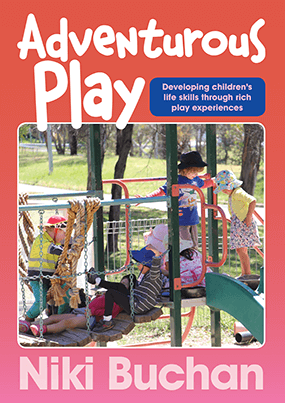
My fondest childhood memories are of long periods of engaging play with my siblings, and any other children we found. I remember the numerous adventures we had together as we explored, experimented, and learnt about our limitations and abilities.
In most of my fondest memories, no adults were around. We could get up to innocent mischief that our parents probably would not have approved of. Stories of experiences that were exciting, a little bit scary and then those wonderful feelings of achievement and mastery. Even those ‘I DID IT’ emotions. Linked to these are the inevitable scabs on knees to be picking at and loose flaps of skin on stubbed toes.
My biggest regret as a child was that I never broke a limb. So, I never got to experience a plaster cast! However, I do still have some physical scars I can celebrate as badges of honour, as learning injuries.
Will our children have the same rich memories of adventures to share one day? Or will their memories be of constant adult supervision, monitoring, being told what to do and cautioning against risk-taking? Will our children be crippled by anxiety about their safety? Or will they be confident self-risk assessors who know how to negotiate the world around them?

Re-framing our thinking of adventurous and risky play
Adventurous and risky play is often considered too dangerous for our young children. Adults feel they need to protect them and prevent them from all injuries. In early childhood settings, risk is often considered as negative, to be prevented by educators responsible for other people’s children.
What if we reframed our thinking to see children’s self-directed play, including risky adventurous play, as an entitlement or right that is essential for children’s normal holistic development?
Helen Keller once said, “Life is either a great adventure or nothing at all”. We need to reconsider the language we use. By reframing ‘taking a risk’as ‘exploratory play’ or ‘adventurous play’ and describing minor injuries as ‘learning injuries’.
We need to think again about the message we give children and parents when we write accident forms for minor injuries. Taking a risk is about uncertainty, challenge, opportunity, exploration. It is also about building knowledge, increasing confidence and self-esteem, and reducing anxiety in the child.
Adventurous play embraces many different types of play for young children as they explore, experiment, and learn about themselves and others. It allows them to challenge themselves physically, emotionally, socially, and cognitively. This is essential for normal child development because adventurous play builds knowledge, skill, confidence, resilience, and a risk-taking disposition.
Piaget’s schematic play, Goldschmied’s treasure baskets and heuristic play, and Hughes’ 16 play types all involve an element of positive risk-taking.
Dr Sandseter identified six risky play behaviours children choose to participate in:
- exploring height
- experiencing speed
- being near dangerous elements (fire and water)
- rough and tumble play
- using dangerous tools
- moving away from the adult.
All are essential urges or developmental drives children have that we should support. It is worth reflecting on how we currently provide opportunities for these behaviours in a developmentally appropriate way for children of all ages.

Risks and hazards are part of child development
Removing all risks and hazards from play opportunities is not the way to provide for this element of essential, normal, and healthy child development. Instead, early childhood educators should support and encourage it. When they help children identify and manage the risks and hazards, they will learn how to keep themselves safe.
Children must learn how to negotiate risks and hazards to become competent lifelong self-risk assessors. That is the only way to keep children safe. Supportive adults need to provide sensitive teaching and learning as children participate in adventurous play. Often, they will need to intentionally provide this through an enriched environment.
The following will clarify how I am using several key terms in this article, given they can mean different things to different people.
- Safe means that the potential risks are acceptable, not that there is no risk.
- A hazard is something with the potential to cause harm and injury. Everything in life has this potential and you can define them as a good or bad hazard. A good hazard can offer benefits and children can see and assess the dangers. But a bad hazard has no benefits, and children can’t see or assess the risk themselves.
- Risk means the consequences and therefore you cannot accurately predict any possible harm.
- A risk assessment in play is the likelihood and possible severity of an opportunity. In all play, we must look at opportunities in terms of their benefits versus their risks instead of only looking at the negatives.
- Harm and injury is not only immediate physical harm. It also needs to be considered as emotional, social, mental, developmental, and cognitive harm that may occur in the long term.

Intentional risk participation is essential for child development
By providing an environment rich in intentional risk, children can choose to participate in a range of self-directed experiences. These experiences could include being barefoot outdoors, where time, space and the perception of freedom can be felt. Encouraging these experiences can open the way to challenge, adventure and growth.
Among the 16 play types that Hughes identified, educators most often place restrictions on the more physically active adventurous ones. Such as ‘rough and tumble play’, ‘recapitulative (weapon) play’ and ‘deep (perception of danger) play’. Restrictions may range from excluding such play to stipulating so many rules that the play is no longer adventurous.
By using a combination of research and benefit risk assessment, educators can make an informed decision about children’s play. They should do this to enable all play that is developmentally appropriate, essential for children’s development and that contributes to teaching and learning.
Let’s make adventurous play a priority when many children are struggling with anxiety. Research shows that taking risks increases confidence, resilience, independence, and self-esteem and reduces anxiety. Life is an adventure to live. Children need to run, climb, jump, tumble, balance, make fires, play in the dark. They need to live life to the full.
Written by Niki Buchan
About the author
Niki Buchan is senior educational consultant with Natural Learning Early Childhood Consultancy and Real World Learning Consultancy. She has lived and worked in South Africa and Scotland and has been calling Australia home since 2011. Niki has a great love for the outdoors and has been working with both adults and young children in very consultative, naturalistic and sensorial environments both indoors and outdoors for more than 35 years.
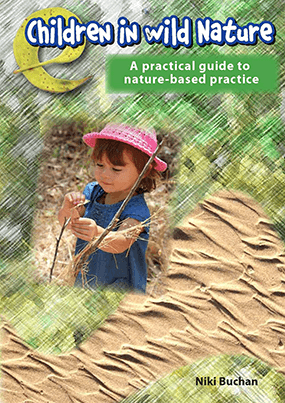
She works internationally as a conference keynote speaker, nature pedagogue, mentor and author and has been invited to work in the UK, USA, Canada, Iceland, Sweden, South Korea, Norway, Denmark and South Africa. Niki has developed a reputation as a strong advocate for children’s right to a high-quality childhood with a deep concern about children’s mental health and trauma. She trusts children as being capable and competent, including their ability to assess and take their own risks. Niki believes children have a right to regular access to nature and to have their voices heard in matters that affect them. She is considered a leading voice in promoting nature-based practice and is the author of multiple early childhood resources.
1 thought on “Risky play and child development”
So true – and so important to find the best balance between the dignity of taking reasonable risks and the duty of care of the educator in early childhood. Exploring, discovering and making mistakes are all so fundamental to learning. Great article!
Comments are closed.