When educators shift the focus from perfection to progress, children start seeing challenges as opportunities rather than obstacles. Introducing growth mindset benefits! Over time, this simple change builds resilience, confidence, and a willingness to take risks – skills that set them up for lifelong learning.
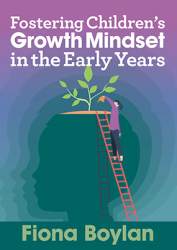
In this blog, I share the experience of Tess Herring and her team at Tumut Community Preschool, who have been implementing growth mindset theory and the nine principles from my book, Fostering Children’s Growth Mindset in the Early Years over the past 18 months.
Why a growth mindset matters
In early childhood education, the language we use and the attitudes we model shape how children see themselves as learners. Carol Dweck’s concept of growth mindset (2016) is the belief that abilities and intelligence can be developed through effort, persistence and learning from mistakes. For educators, embracing a growth mindset is not just about teaching children to “try harder” – it’s about creating a culture where challenges are welcomed, mistakes are valued and progress is celebrated.
Adopting a growth mindset benefits educators as well as children. It encourages reflective practice and professional growth. Educators become more intentional about the language they use, the expectations they set, and the opportunities they provide for children to take ownership of their learning.
Children in their early years form foundational beliefs about themselves and their capabilities. When they encounter difficulty, their response – whether they give up or keep trying – can set the tone for future learning. A growth mindset helps children understand that learning is a process, not a fixed trait. Instead of thinking “I can’t do this,” they begin to say, “I can’t do this yet, but I’ll keep practicing.”
What educators have changed in their practice
Educators at Tumut Community Preschool shared how mindset theory has influenced their teaching.
Language matters
“It’s been a good reminder of the language we use in the classroom with the children. I’ve definitely been more conscious of moments where it can be used.”
Educators are replacing phrases like, “perfect” with words such as, “progress” and “improvement”. This reinforces the idea that learning is ongoing and mistakes are part of the journey.
Encouraging independence
“Trying to do less for children and let them have a go themselves so they know they can try and get better.”
Instead of stepping in too quickly, educators give children space to attempt tasks independently. This builds confidence and resilience, showing children that effort leads to growth.
Daily affirmations and positive framing
“We have incorporated daily affirmations into our morning meeting, changed the way we have said things to the children to help them have a growth mindset and challenged the children to step out of their comfort zone.”
Affirmations such as, “I can learn from my mistakes” or “I am getting better every day” help children internalise positive beliefs about themselves as learners.
Normalising mistakes
“I encourage students to own their mistakes as part of the learning process. If they can spot their mistake, then they are already learning something.”
By openly discussing errors and modelling how to correct them, educators create a safe space where mistakes are not feared but embraced as stepping stones to success.
What changes did they see in the children?
The impact on children has been significant. The educators reported noticeable shifts in attitudes and behaviours.
Greater persistence and resilience
“Over time the children have shown growth in their positive sense of self-worth and they have become more persistent.”
Children are moving from “I can’t do it” to “I’ll give it a go and keep practicing.” This change in language reflects a deeper shift in thinking as they now see effort as a path to improvement.
Increased willingness to take risks
“Children are a lot more eager to continue giving things a go when provided with an opportunity for positive mindset.”
Instead of avoiding challenges, children are stepping out of their comfort zones, trying new tasks, and embracing opportunities to learn.
Using affirmations independently
“We have started hearing the children use our affirmations within the room and to other children.”
When children begin to use positive self-talk on their own and with peers, it shows that growth mindset principles are becoming internalised.
Reduced emotional outbursts
“Less emotional outbursts as they understand it’s ok to make mistakes and we can learn from them.”
Understanding that mistakes are normal helps children regulate emotions and approach problems calmly.
Openness about errors
“Children are open and honest about making a “mistake” or “error.” They don’t try to hide it if they get a different response or answer. We use this as a learning opportunity to progress.”
This openness fosters a collaborative culture where everyone learns from each other.
Five practical tips to get growth mindset benefits
- Model growth mindset language
Use phrases like, “You’re improving” or “What can we learn from this mistake?” instead of “You’re so smart” or “Perfect.” - Celebrate effort, not just results
Acknowledge persistence and problem-solving, even if the outcome isn’t correct yet. - Create a safe space for mistakes
Share your own learning experiences and show that errors are part of progress. - Incorporate affirmations
Start the day with positive statements that reinforce resilience and confidence. - Encourage reflection
Ask children to think about what they learned from a challenge and what they might try next time.
Final thoughts on growth mindset benefits
Growth mindset is more than a buzzword – it’s a transformative approach that benefits both educators and children. By shifting the focus from perfection to progress, we empower children to see themselves as capable learners who can overcome challenges through effort and persistence. For educators, it’s a reminder that the words we choose and the attitudes we model have a lasting impact.
About the author
Dr Fiona Boylan is a lecturer and researcher in Early Childhood Studies in the School of Education at Edith Cowan University in Perth, Western Australia. She has 25 years of experience teaching and leading in early childhood settings across the early years of school. Fiona’s research centres on developing children’s metacognitive skills to enhance their learning capabilities and agency toward learning. In particular, her PhD researched the implementation of Carol Dweck’s mindset theory to foster children’s growth mindsets in the early years context. Fiona has presented and published her research nationally and internationally as she seeks to support educators to foster a growth mindset culture in early learning centres, classrooms, and schools. She shares the power of having a growth mindset and of neuroscience wherever she goes and is learning all the time as a mum, educator, author, speaker, and leader. Her wish is for children to embrace challenges as opportunities, setbacks as lessons, and effort as the path to mastery.