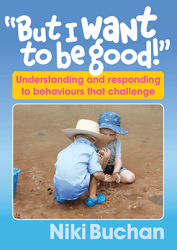
Is it challenging behaviour – or simply a big emotion overwhelming a child? In early childhood education, figuring out the difference matters to support emotional regulation.
Screaming, kicking or biting can look like defiance, but often it’s a sign a child is still developing the skill of emotional regulation. For educators, regardless of whether you align to the EYLF, VEYLDF or Te Whāriki Early Childhood Curriculum – the key is learning to see beneath the surface: is this a moment for behaviour support, or a chance to guide a child through their feelings?
Niki Buchan steps us through a range of practical calming strategies, supportive conversations and exercises in empathy, so that we can respond to the need behind the behaviour – and help children build resilience, stronger relationships and lifelong skills for managing emotions.
Supporting emotional regulation and wellbeing in early childhood
Increasingly, I am asked for behaviour guidance in ECE with behaviours such as screaming, biting, kicking or throwing objects. Such big emotions often indicate a child’s inability to self-regulate – a skill they develop over time through language development and supportive adult responses that teach them acceptable ways to express their feelings and get their needs met.
Why emotional regulation in early childhood matters
Children who effectively manage their impulses, cope with stress, focus their attention and learn effectively, generally have strong emotional regulation skills that benefit them throughout life.
Social and emotional development
Learning to manage emotions helps children to feel better about themselves, have a positive self-image and cope better with stress – which is important for their mental health.
They get on better with others and form healthy friendships, leading to better social skills and avoidance of social conflict or emotional outbursts – leading to a calmer, more stable environment for all.
Physical well-being
Emotional regulation skills contribute to healthy brain development and are linked to better health and well-being, now and in the future. These skills develop in early childhood as the foundations for success in later life and are linked to mental, social and physical well-being.
Academic and cognitive benefits
These skills are also linked to executive function, enabling children to concentrate and pay attention – essential for learning. Children use their cognitive abilities to solve problems, set goals and focus on learning when emotions are balanced.
Effectively adjusting to changes academically and socially is also vital in preparing children for formal schooling.
Understanding the difference between big emotions and behaviour issues
Behaviour is a child’s primary way of communicating intense emotions and any needs that are not being met. Young children may lack the language and self-regulation skills to express themselves effectively and appropriately. Not listening and temper tantrums are the visible tip of the iceberg, signalling emotional distress or their needs not being met.
Differentiating between the two is important:
- emotional expression is a temporary outburst due to an overwhelming emotion
- behavioural issue is a consistent pattern of aggression or defiance which may point to more significant issues requiring different interventions.
Emotions as a catalyst for behaviour
Young children may not understand their own big emotions in early learning or how to express them verbally. Their behaviour is their language.
Behavioural issues as a sign of deeper needs
The challenging behaviours in early childhood education are the visible behaviours. We need to explore deeper and focus on what lies beneath the surface – the child’s feelings and thoughts that make up the underlying emotions driving the behaviour.
Consistent, destructive or disruptive patterns of behaviour may indicate the child is struggling to manage big emotions, needing more help to develop self-regulation skills.
Early childhood strategies for emotional regulation
Strategies for emotional regulation in early childhood include co-regulation through a calm, supportive adult presence.
Educators can:
- demonstrate calming techniques
- help children to identify, discuss and label their feelings
- explore opportunities to practice new strategies
- proactively reduce stress by avoiding overwhelming situations.
Calming strategies for young children in the moment
Teaching and modelling calming techniques children can use in the moment, helps them feel more prepared and gives them skills they can use to self soothe.
Moving to a different space
The space a child is in may contribute to their dysregulation. Moving to a different space – a calmer, less busy space is helpful.
If the child is stressed indoors, move outdoors where possible. Walking together in a nature space side-by-side, or on their own depending on the individual child’s needs, is calming and distracting for both adult and child.
Get active
Some children may become agitated – crying, throwing objects and kicking. This is often due to the body releasing adrenaline and other stress hormones. Their fight-or-flight response is engaged. Movement and exercise will help to release pent-up energy and can stabilise their mood.
Offer a comforter
Familiar objects that offer a child comfort and grounding, allow them to better cope with fears and helps them to regulate their emotions. These are often a baby blanket or soft toy but could also be a stress ball or wristband.
Simple breathing exercises
One of the quickest ways to calm a child is to focus on a simple breathing technique, completing a certain number of cycles. Initially the adult might need to model with the child:
“Deep breath in.” (Count 4)
“Hold the breath.” (Count 4)
“Slowly exhale.” (Count 4)
“Pause” (Count 4)
Repeat
Grounding
To help a child feel connected with the present, ask them to say or think about:
- 5 things they can see
- 4 things they can touch
- 3 things they can hear
- 2 things they can smell
- 1 thing they can taste
Keeping busy
Focusing on a creative activity may help to distract a child from repetitive or worrying thoughts, and /or offer a way for them to express or possibly let go of their thoughts. Distractions could include:
- drawing, colouring in or painting
- building a cubby or shelter
- doing puzzles
- reading books.
Reflect and share together
Children who are dysregulated are unable to listen or think. However, some children may want to talk about what happened for them once they have become calm again.
Partnering with families and support networks
Communication is key to partnering with families and support networks, and collaboration brings everyone together to create environments where growth and building resilience thrive. These relationships are developed over time, based on mutual respect and trust.
Sharing behavioural strategies with families supports skill development and emotional security and is fostered through regular family involvement. Helping families manage their stresses contributes to positive developmental outcomes.
- Remain professional and helpful so that families feel comfortable asking questions or seeking information.
- Unite with families and your settings around shared goals – building on strengths and addressing challenges together will unlock each child’s full potential.
- Professionally share the positives of a child’s day as well as the challenges! It’s important to remember, no parent wants constant negative feedback.
When parents need professional support for their child, referral to their GP would be the first step in seeking a diagnosis or further therapy.
The role of early childhood educators and primary teachers
Implementing a range of strategies to support transitions and emotional regulation can mean, over time, big emotions play a smaller role in your setting.
- Provide an environment that will not overwhelm children. Calm, quiet spaces, avoiding bright lights, including comfort items such as soft toys, will all help.
- Establish flexible, predictable routines that offer a sense of security. Should a child become dysregulated, their adult needs to remain present, calming, comforting and reassuring the child before they try to understand or correct the behaviour.
Some children need their adult to be physically close while others may need a more distant approach. This and the use of a calm tone can help to regulate the activated nervous system.
Use everyday moments to support self-regulation and teach the children emotional skills:
- label their feelings to build emotional literacy – scared, sad, angry
- provide books showing emotions or picture cards showing calming activities
- mentor and model how to break down problems and make thoughtful decisions
- acknowledge when a child successfully uses a self-regulation skill to affirm positive behaviour.
In conclusion – responding to a dysregulated child
Respond to the emotion and not just the behaviour. Focus on helping the child understand, name and manage their feelings rather than using a punishment. When they become calm, talk to them and discuss what happened. Explain that the behaviour is what we see, and that there is a much bigger need or feeling underneath – a bit like an iceberg, where we see the top but there is so much more underneath. Practice these things and over time you and your children will reap the rewards.
About the author
Niki Buchan is CEO and owner of Natural Learning Educational Consultancy. She has lived and worked in South Africa, Australia and is now based in Scotland. She works internationally as a conference keynote speaker, nature pedagogue, mentor and author having been invited to work in Australia, UK, USA, Canada, Iceland, Sweden, South Korea, China, Norway, Denmark and South Africa. She has developed a reputation as a strong advocate for children’s right to a high-quality childhood with a deep concern about children’s mental health and trauma.
Niki trusts children as being capable and competent, respects their ability to know what they need for their development including assessing and taking risks. She has a great love for the outdoors and has been working with both adults and young children in very consultative, naturalistic and sensorial environments both indoors and outdoors for more than 40 years. She believes children have a right to regular access to nature and to have their voices heard in matters that affect them.