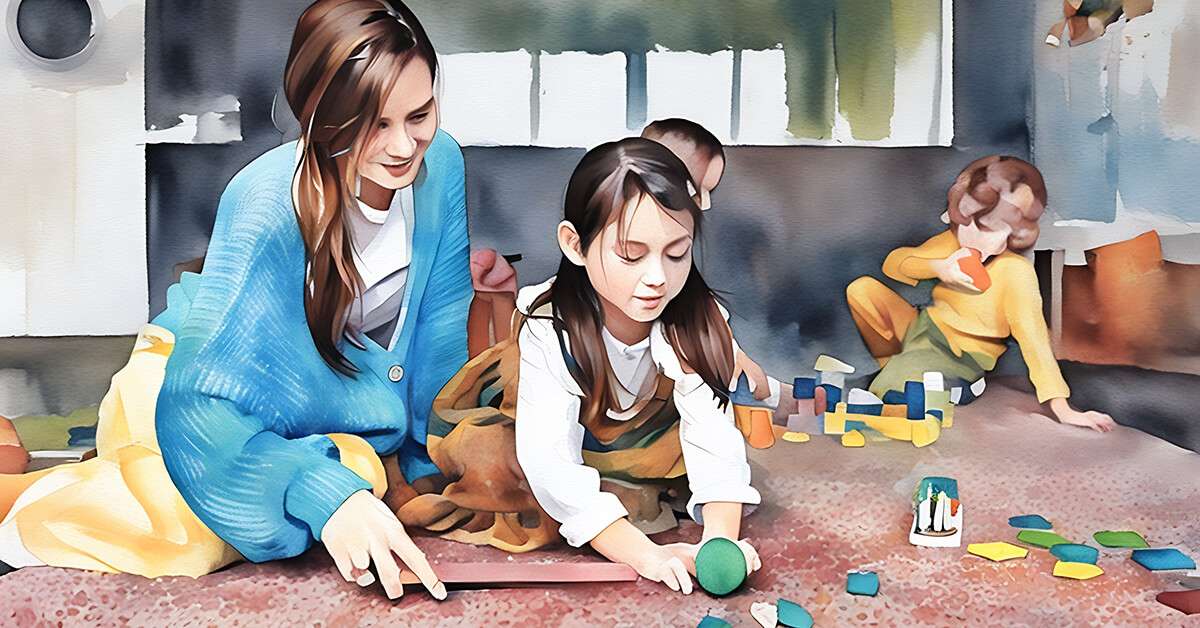
Families have genuine concern for their child’s education and well-being, and new families settling children into early childhood education programs need reassurance that their children will be safe, secure, treated with respect and accepted for who they are.
In Australia, recent media attention around keeping children safe from abuse in early childhood education settings highlighted controversial issues: gender roles, fast tracked training, the need for CCTV – particularly in bathrooms, working with children checks and “police checks” to name a few, have all been questioned. Trust, belonging and safe supervision of children starting childcare will be a significant concern for all families.
With this in mind, early childhood professionals can anticipate questions that new families may have about practices to keep their children safe.
Why belonging matters from the first day
Transition to an early childhood programme involves adjusting to the new environment, relationships, routines and expectations. Patience and understanding are required, with time provided for adjustment to support the process. Systems and family-centred practices in ECE that promote belonging, trust and keep children safe, must be strengthened.
In Effective Supervision in Action, Halton and Treveton (2025) explain: “The introduction of the Child Safe Standards has meant that services and educators are required to be more proactive in keeping children safe from harm.” (p 43)
Families will need assurance of this from the first day of commencement.
Building a sense of belonging is both a feature of the Early Years Learning Framework for Australia V2.0 (2022) and Te Whāriki: He whāriki mātauranga mō ngā mokopuna o Aotearoa – Early childhood curriculum (2017).
A sense of belonging is fostered through:
- social interactions built on trust where environments are inclusive – reflecting the cultural diversity and languages of children and families within the community
- understanding that children may need familiar home comfort items available
- acknowledging the individual strengths of families and the critical role they play in their children’s learning and development
- informing and addressing a family’s questions about policies, practices, routines, curriculum, staff qualifications and experience without judgement
- providing and displaying information in the home languages of families.
Supporting new families through the transition into education and care
Orientation into early childhood education and the transitions involved need to be thoughtfully planned. Families need to feel supported when welcomed and know they can be involved in decision making for their child.
It is important to:
- make shared decisions on a child’s needs and the best approaches to accommodate both the child and their family for transitioning between home and the early childhood programme
- reassure families they are welcome to visit during operational hours and that the lines of communication will be open for discussing their child’s progress
- convey what information about their child will be helpful to provide during the transition process.
Information is often sought about the homelife of a new child, with an expectation of trust that the family will provide it. Whilst often, little information is provided to families about staff, making trust difficult. Two-way reciprocal communication can help build staff and family relationships, especially when families know something about the staff being entrusted with the care and education of their child.
However, being mindful that some families may be reluctant to disclose particular personal details about their child’s home life and background will help. Some staff may also view conveying information about themselves as unprofessional.
MacNaughton and Hughes (2011) discuss “privileging” and the unfair thinking habit that assumes, as professionals, staff believe they have a right to seek personal information about the lives of children and their families. They suggest you can counter privileging and “assume that parents and early childhood education and care staff have a right to privacy and a right to choose what to share.” (p 78)
Explaining to families why you require particular information will help them understand why the information can support the education and care of their child. Also, respect their right to withhold any personal information they choose not to disclose.
Transitioning into early childhood settings: orientation strategies that build confidence and connection
Commitment to communication through face-to-face interactions – to discuss and plan how to accommodate the child and their family’s needs to help understand each other’s perspectives – will be key to building their confidence and connection in you.
This may involve:
- bilingual support to families with English as a second language (ESL)
- information handbooks and enrolment forms that are translated
- discussing cultural beliefs, values and needs that may affect staff–child interactions
- children commencing for short intervals with their families to become familiar with the environment
- learning key words in the child’s home language
- flexible routines that support the child’s transition and needs.
Building trusting relationships with families and children in early learning
Relationships are the foundation for building trust with children and their families. In Documenting Children’s Learning: Disrupting the myths, (Goodsir and Houghton, 2023) Kelly and I suggest that:
“Where educators and families have a common goal for children’s learning and development, it not only communicates the idea of working in partnership with families but also supports trusting relationships between children, educators and families. Having partnerships allows children to see important people in their lives working well together. It is critical to respect the different levels of involvement families can have with an early childhood service and, on this foundation, provide families with varying avenues of engagement.” (p 45)
Trusting relationships involve:
- genuine caring, compassionate dispositions from staff
- respecting family beliefs and values related to children’s care needs.
Children’s intimate care needs require respectful practices with familiar staff where secure relationships have been established, eg, sleep, toileting and nappy change routines. New families may seek information related to monitoring of children’s care needs. Knowing and understanding what is important to families through open communication will help build trusting relationships.
Embedding family-centred practices into everyday routines
Families need reassurance that their children are receiving the best possible care and education through ongoing communication and consultation. Lindon and Rouse (2012) explain in Parents as Partners that, “Friendly regular conversation will be the informal route to hearing what parents think and feel.” (p 52)
- Get to know families to form collaborative partnerships.
- Embed their values into the philosophy of the service.
- Build on knowledge and understanding of the lived experiences of families and children.
Positive relationships with families will support them to feel valued and respected and will help foster their involvement in their children’s learning and development.
Creating welcoming environments for supporting new families in early learning centres, fostering a sense of belonging, and ensuring that all families trust that child safe practices are in place will be essential.
References
Australian Government Department of Education (2022) Belonging, Being and Becoming: The Early Years Learning Framework for Australia (V2.0). Canberra: Australian Government Department of Education for the Ministerial Council
Goodsir, K., and Houghton, A, (2023) Documenting Children’s Learning: Disrupting the myths, NSW, Australia: Teaching Solutions (Imprint of Essential Resources)
Halton N., and Treveton N, (2025) Effective Supervision in Action: Enhancing practice in early childhood education, Teaching Solutions (Imprint of Essential Resources)
Lindon, J., and Rouse, L. (2012) Parents as Partners: Positive relationships in the early years, Albert Park: Teaching Solutions
MacNaughton G., and Hughes, P, (2011) Parenting and Professionals in Early Childhood Settings, Maidenhead, Berkshire: Open University Press
Ministry of Education. (2017). Te Whāriki: He whāriki mātauranga mo ngā mokopuna o Aotearoa; early childhood curriculum. (2nd ed.). Wellington: Ministry of Education
About the author
Anne Houghton has over 50 years’ experience in early childhood education as a teacher, consultant, lecturer, and professional development presenter. She has published widely, including There Stood Our Dog, Intentional Teaching, and Documenting Children’s Learning: Disrupting the Myths (with Kelly Goodsir).