Early childhood is critical for cognitive and emotional development, as children form beliefs about their abilities and potential. Carol Dweck’s concept of a growth mindset (2016) posits that abilities and intelligence can be developed through dedication, hard work, and learning from feedback. This contrasts with a fixed mindset, where abilities are seen as static and unchangeable. In early learning, fostering a growth mindset profoundly impacts children’s development and future success.
What does a growth mindset look like?
Understanding what a growth mindset looks like is crucial for educators aiming to cultivate it in young children. In early learning, children with a growth mindset exhibit certain behaviours and attitudes that differentiate them from those with a fixed mindset. These behaviours may include:
- Embracing challenges: Children with a growth mindset view challenges as opportunities to learn and grow. They are not deterred by difficult tasks and are more likely to persist in the face of obstacles.
- Learning from feedback: Constructive feedback is seen as valuable information to improve. Children with a growth mindset use feedback to improve their skills and understanding.
- Persistence and resilience: Instead of giving up when they encounter difficulties, these children show persistence and resilience. They understand that effort is a path to mastery.
- Celebrating effort: They focus on the process of learning rather than just the outcome. This means they value effort and hard work, knowing that these are crucial for improvement.
- Seeing effort as a positive: Unlike those with a fixed mindset who might see effort as a sign of low ability, children with a growth mindset understand that effort is necessary for growth and success.
What are the benefits of a growth mindset in early childhood?
Children with a growth mindset are more motivated, achieve at a higher level, have better social-emotional skills such as self-regulation, are more adaptable and may have better wellbeing (Tao et al., 2022). Additionally, educators will be meeting the directive of policy documents such as the Early Years Learning Framework Outcome Four (AGDE, 2022).
- Enhanced learning and achievement: Children with a growth mindset are more likely to take on challenges and persist in the face of difficulties. This persistence leads to greater learning and achievement over time. They are less likely to be discouraged by failure and see it as a stepping stone to success.
- Improved social and emotional skills: A growth mindset also positively impacts children’s social and emotional development. These children are more likely to exhibit empathy, better handle stress, and show resilience in the face of setbacks. They understand that learning from mistakes is part of the process, which can lead to healthier social interactions and emotional well-being.
- Lifelong Learning and Adaptability: By developing a growth mindset early, children are more likely to become lifelong learners. They are open to new experiences and willing to adapt to changing circumstances. This adaptability is crucial in a rapidly changing world, where the ability to learn and grow continuously is a key determinant of success.
- Alignment with EYLF Outcome 4: The Early Years Learning Framework (EYLF) (AGDE, 2022, p. 21) specifically states in Outcome Four that educators foster children’s growth mindsets. Implementing the following principles will assist educators in meeting EYLF Outcome Four.
What are nine principles educators can use to develop children’s growth mindset?
Research by Boylan et al. (2018) found early childhood educators believe it is important they foster children’s growth mindsets but don’t feel confident in doing so. The following nine principles (or rules of thumb) developed by Boylan et al. (2023) support educators in fostering children’s growth mindset in early learning contexts.
- Educators develop knowledge of their own mindset and model effective learning using a growth mindset.
- Educators incorporate and model a common language to teach children about mindsets.
- Educators assist children to set goals and reflect on their learning.
- Educators encourage persistence, focused effort and normalise making mistakes in a safe and supportive learning environment.
- Educators provide feedback for effort rather than talent or ability.
- Educators teach children how brains work when learning.
- Educators hold high expectations and believe all children can learn and grow.
- Educators provide children with strategies for struggle as they work towards achieving a goal.
- Educators share mindset practices with parents, carers and community.
How to get started with implementing a growth mindset
The role of educators in fostering a growth mindset in early learning environments requires intentional strategies and practices. Here are some effective ways to get started as outlined further in this ECA resource.
Model growth mindset behaviours
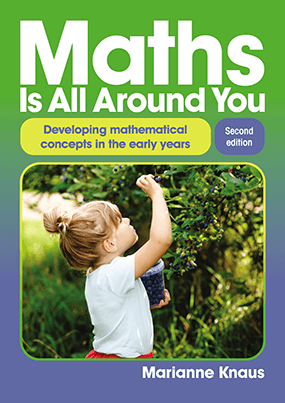
Educators can set a powerful example for young children by role modelling how to embrace challenges, persist through difficulties, and learn from feedback. Marianne Knaus’ blog Developing a positive mindset about mathematics in early childhood education describes how you might do this when teaching mathematics.
Encourage effort and process
Focus on praising effort, strategies, and progress rather than just the outcomes. For example, instead of saying “You’re so smart,” say “I can see you worked really hard on this.” This type of praise reinforces the value of effort and learning from mistakes.
Create a safe learning environment
A safe and supportive learning environment allows children to take risks and make mistakes without fear of judgment. Encourage a growth mindset by viewing mistakes as learning opportunities. Celebrate when children try new things, even if they don’t succeed at first.
Use growth mindset language
Incorporate growth mindset language into everyday interactions. Phrases like “I can’t do this yet” or “What can we learn from this?” help children reframe their thinking. Using stories and books that emphasise growth mindset themes can also be effective.
In conclusion
In conclusion, fostering a growth mindset in early childhood can significantly influence a child’s cognitive, emotional, and social development. By celebrating effort, children can develop a resilient and adaptable approach to learning. Inspire children to embrace challenges, learn from feedback and persevere through difficulties. Implementing these principles not only aligns with educational frameworks like the EYLF but also sets children on a path to future success and well-being.
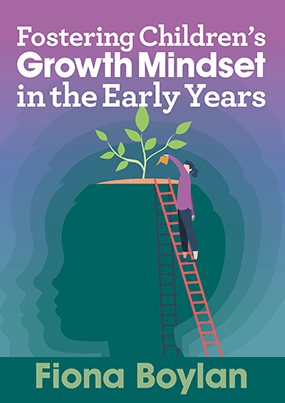
Educators play a pivotal role in guiding young children to develop a mindset that will serve them well throughout their lives. Our new book Fostering Children’s Growth Mindset in the Early Years supports educators to know what a growth mindset looks like, recognise its benefits, and implement effective strategies, to nurture resilient, adaptable, lifelong learners.
Fostering Children’s Growth Mindset in the Early Years offers an insightful guide on how educators can foster growth mindsets in children from birth up to eight years of age. It centres on a set of nine design principles for positive change, along with practical strategies for integrating each one into your setting.
This accessible approach, based in both research and practice, will support you to create a culture that inspires children to understand their mindsets, develop a love of learning and enhance both their achievement and their wellbeing.
About the author
Dr Fiona Boylan is a lecturer and researcher in Early Childhood Studies in the School of Education at Edith Cowan University in Perth, Western Australia. She has 25 years of experience teaching and leading in early childhood settings across the early years of school. Fiona’s research centres on developing children’s metacognitive skills to enhance their learning capabilities and agency toward learning. In particular, her PhD researched the implementation of Carol Dweck’s mindset theory to foster children’s growth mindsets in the early years context. Fiona has presented and published her research nationally and internationally as she seeks to support educators to foster a growth mindset culture in early learning centres, classrooms, and schools. She shares the power of having a growth mindset and of neuroscience wherever she goes and is learning all the time as a mum, educator, author, speaker, and leader. Her wish is for children to embrace challenges as opportunities, setbacks as lessons, and effort as the path to mastery.
References
Australian Government Department of Education [AGDE]. 2022. Belonging, Being and Becoming: The Early Years Learning Framework for Australia (V2.0). Canberra, Australia: Australian Government Department of Education for the Ministerial Council.
Boylan, F., Barblett, L., & Knaus, M. (2024). I think I can, I think I can’t: Design principles for fostering a growth mindset in the early years. Journal of Early Childhood Teacher Education, 45(1), 96-117. https://doi.org/10.1080/10901027.2023.2251924
Boylan, F., Barblett, L., & Knaus, M. (2018). Early childhood teachers’ perspectives of growth mindset: Developing agency in children. Australasian Journal of Early Childhood, 43(3), 16–24. https://doi.org/10.23965/AJEC.43.3.02
Dweck, C. S. (2016). Mindset: The new psychology of success (updated edition). Random House.
Tao, W., Zhao, D., Yue, H., Horton, I., Tian, X., Xu, Z., & Sun, H. J. (2022). The Influence of Growth Mindset on the Mental Health and Life Events of College Students. Frontiers in Psychology, 13, 821206. https://doi.org/10.3389/fpsyg.2022.821206