A mixture of expanded explanations, clarifications and updates. Let’s not forget a “small number of more substantial changes.” That is how the upcoming changes to the Early Years Learning Framework (EYLF) have been described.
When communicated in such terms, the changes do not sound significant. However, they will require a shift in teaching strategies for early childhood education providers.
The EYLF has been a successful part of the National Quality Framework for over a decade. To remain current, changes were required to support the foundations for quality early childhood education in Australia. Consequently, a refresh was needed rather than a whole rewrite.
Let’s break down the upcoming changes to the EYLF together.

The vision of the changes to the EYLF
The overall vision remains characterised as “belonging, being and becoming.” Now, the importance of fostering lifelong learning in children is part of the vision. And more significantly the update includes, “All children are active and informed members of their communities with knowledge of Aboriginal and Torres Strait Islander perspectives.”
This is a meaningful change to recognise the world’s oldest continuous living culture. Also, it aligns the EYLF with the Alice Springs (Mparntwe) Education Declaration.
Changes to the EYLF Principles
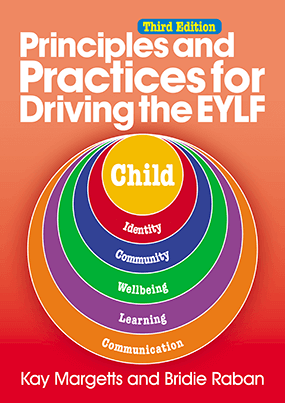
The Principles have been expanded from five to eight. As explained in Principles and Practice for Driving the EYLF, the Principles are statements “that express values and beliefs, and underpin practice.”
- Secure, respectful and reciprocal relationships – Positive relationships between early childhood educators and children are a key theme of the updated early learning framework.
- Partnerships – One new addition here is assisting children and families with e-safety and the use of media. Another is developing culturally safe spaces to help foster relationships with diverse families. Cultural safety is another key theme to the framework.
- Respect for diversity – Expanded to include valuing traditional practices, heritage and ancestral knowledge within the early childhood curriculum.
- Aboriginal and Torres Strait Islander perspectives – This is a new principle. It links back to the over-arching vision to celebrate and understand the Aboriginal and Torres Strait Islander histories and culture.
- Equity, inclusion and high expectations – Inclusion is the addition here. It is about recognising the right of ALL children to participate in quality early childhood settings. This is regardless of their circumstances, gender and capabilities.
- Sustainability – Sustainability is another new principle. It incorporates UNESCO’s three dimensions of sustainability. Environmental, social and economic, and the connection between these.
- Critical reflection and ongoing professional learning – This expands on a previous principle. It highlights the need for critical reflection to be part of everyday professional practice.
- Collaborative leadership and teamwork – This is the final new principle. It means making leadership and teamwork a collective professional activity. From formal leadership positions to educators and children.

The EYLF Practice
The EYLF Practice has been reduced from eight elements to seven. Principles and Practice for Driving the EYLF describes Practice as actions. Because they are “the things early childhood educators do to achieve or put into action a particular principle.”
- Holistic, integrated and interconnected approaches – The practice was renamed to reflect the integrated nature of the EYLF. It asks early childhood teachers to integrate all elements of EYLF documentation into their practices.
- Responsiveness to children – Now provides clearer definitions to help educators respond to children individually. Additionally, the practice encourages educators to consider children’s “funds of knowledge” when making curriculum decisions.
- Play-based learning and intentionality – The practice was renamed to show the connection between play-based learning and intentional teaching. It provides new examples of how educators can do this by including popular culture and digital technologies.
- Learning environments – Again the theme of culturally safe environments is now incorporated. It encourages both western and traditional Aboriginal and Torres Strait Islander knowledge to be shared.
- Cultural responsiveness – Cultural competence has been renamed to cultural responsiveness. The renaming is important to solidify the commitment to Aboriginal and Torres Strait Islander perspectives in educational practices. It respects the different ways of being in multiple cultures.
- Continuity of learning and transitions – The updated version has clearer definitions of children’s individual, family and community ways of being, belonging and becoming. What the EYLF terms “funds of knowledge.” The aim is to have improved continuity and transitions between home, centres and school.
- Assessment and evaluation for learning, development and well–being – The final practice has been altered to clearly define the difference between assessment and evaluation.
Changes to the EYLF Learning Outcomes
“The EYLF aims to achieve the highest expectations for all children throughout Australia. These expectations are categorised under five Learning Outcomes.” This helpful introduction to the five Learning Outcomes is from The EYLF and NQS Without Tears. Below we continue to navigate the upcoming changes to the EYLF:
- Outcome 1 Children have a strong sense of identity – The outcome is expanded to include current perspectives of personal and social identity and Australia’s diverse cultural identities.
- Outcome 2 Children are connected with and contribute to their world – Another outcome that has been broadened to reflect today’s world. It calls for children to be “active and informed citizens” through the use of digital technologies and sustainable practices.
- Outcome 3 Children have a strong sense of well-being – There are now three components to this outcome. The expansion includes mental well-being, mental health, and personal safety.
- Outcome 4 Children are confident and involved learners – The language of learning is to be used to develop a growth mindset. This change creates a link between thinking and learning.
- Outcome 5 Children are effective communicators – To match today’s digital society, the updated outcome promotes the safe use of digital technologies and media.
If you would like to continue learning more about the Learning Outcomes, our other blog is a more practical EYLF supporting resource.
National Quality Standard
“The main difference you will see is a stronger connection between the frameworks and the National Quality Standard (NQS).” This is particularly true of areas like sustainability, theoretical approaches and critical reflection. For example, NQS Quality Area One includes intentional teaching, which directly links to the Practice of play-based learning and intentionality.
We have only touched on the NQS here. National Quality Standard provides a more comprehensive guide to the NQS.

While subtle, the upcoming changes to the EYLF better align early childhood education with today’s world. There is a greater focus on digital technologies, culturally-responsive practices and sustainability to foster confidence and creativity in Australian children.