“Students love to play, so what better to get them hooked on science than with fun and easy practical experiments?”
Julia Burton illustrates how science experiments are an avenue to spark students’ interest in science and, as we know, demonstrate scientific concepts. Unfortunately, science experiments within primary schools have always presented a challenge for students and teachers alike.
On the one hand, understanding science is challenging. Students can get discouraged when experiments don’t work out.
And on the other hand, teaching science is a challenge for primary school educators. Many do not have a science background, so lack the confidence to explain how experiments have “gone wrong”.
Without an appreciation for experiments, it is difficult to develop an understanding of them.
Burton’s series of science resources for primary schools, Scientific Experiments, shows how to build students’ appreciation and understanding of science experiments.
Focus on developing science experiment capabilities
Firstly, science experiments can get students questioning, predicting, critiquing and, of course, experimenting. These are necessary skills for accessing and evaluating information.
Help students to develop these capabilities rather than focusing on the outcome of the experiments.
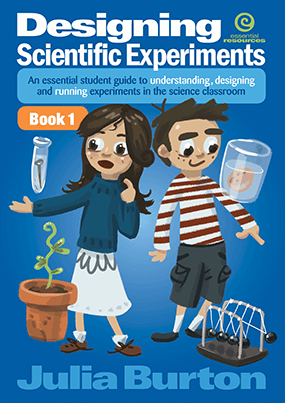
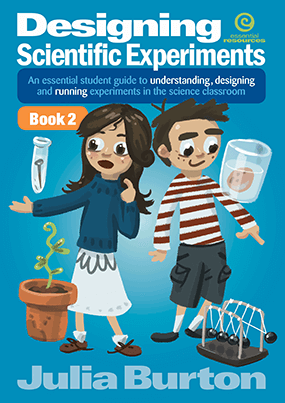
Designing Scientific Experiments takes students through the features of a well-designed experiment. There are worksheets for primary school science lessons that get students to formulate hypotheses and make predictions.
Use a range of science experiment resources
A case study found that “Students became more engaged with science when teachers broadened the range of resources used”.
This is reflected in Burton’s science resources which utilise various “common materials” for science experiments. What is more, Burton includes equipment lists for the experiments – making it easier for teachers to prepare.

Structure the development of skills and knowledge
The same case study showed that learning should be scaffolded by “building on existing understandings and introducing new skills and knowledge in manageable amounts”. This was effective in strengthening learning in primary and lower secondary science classes. Burton’s series is designed to do just that.
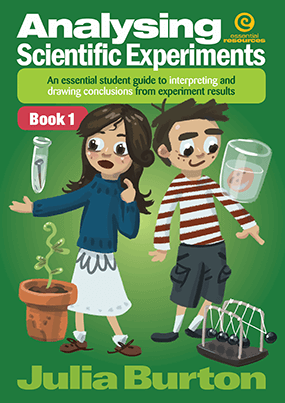
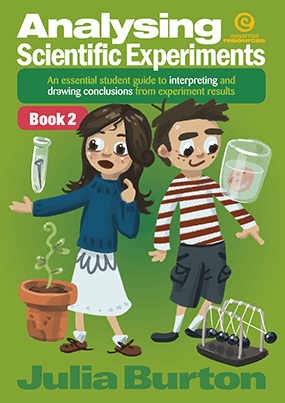
She explains experiments, and the science behind them, in her first two primary school science books. Next, the science resources get students to design and run science experiments in the classroom. Lastly, students learn to interpret and make conclusions in Analysing Scientific Experiments.
Use unexpected science experiment results as opportunities
In Burton’s blog, Why every child needs to learn science at school, she says:
“Students love to play, so what better to get them hooked on science than with fun and easy practical experiments?”
“It’s easy to forget that, before they begin an experiment, scientists usually don’t know for sure what the results will be.”
“There’s no such thing as wrong results. Rather, an unexpected result may indicate an incorrect hypothesis or an opportunity to investigate further to figure out what’s produced it.”
Students are less likely to get discouraged by science experiments when they see “wrong results” as opportunities to further investigate.
For teachers, too, unexpected results are an opportunity to model the deductive process. Were all steps carried out and in the correct order? Was there another unforeseen variable?
In science, deeper learning often occurs during the deductive process, than when students get it “right” the first time.

Link science experiments to students’ lives
Burton’s blog goes on to say, “Science doesn’t just happen in the lab. It is all around us every day and plays an increasingly significant role in our societies”.
The whole point of science experiments, and science in general, is to help students become “scientifically literate”. This prepares them to make sense of the world and find solutions to the issues we face.
Students are more likely to appreciate science experiments when they see the interaction between the experiments and their everyday lives. Soaking up spills is a classic example of science in the classroom that students will also encounter in their young lives.
Involve the community experts
In the case study, schools made use of community experts and groups. They found some of the best learning took place when experts were involved.
Even better for teachers, “By supporting their students to access external expertise, teachers discover that they could engage their students in purposeful science learning without necessarily being experts themselves”.
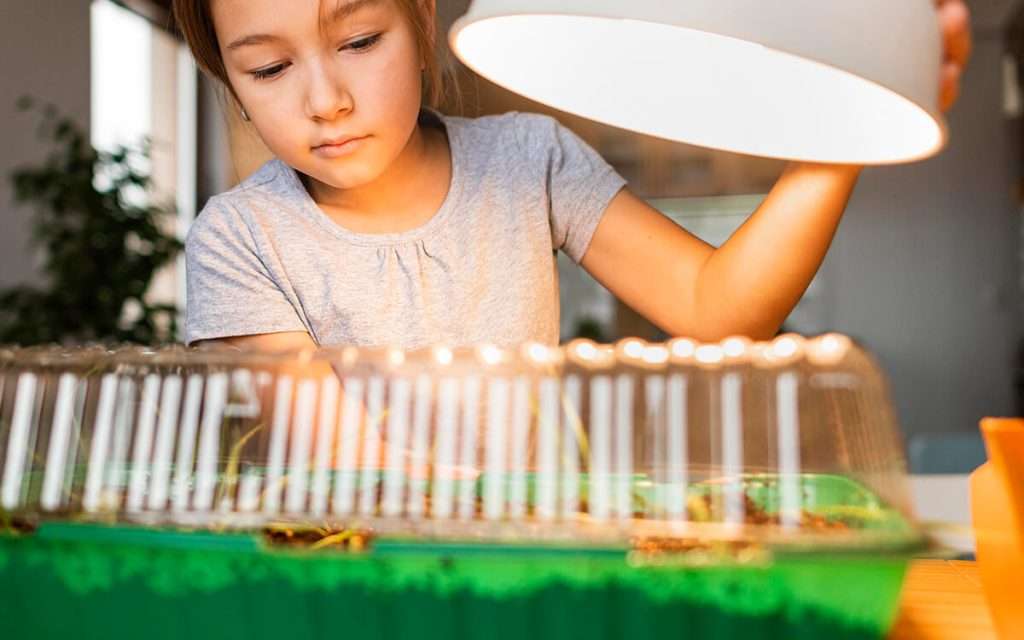
Experiments are a fun and practical way to include science in the classroom. Burton’s primary science resources explain and troubleshoot science experiments for teachers, who previously lacked the confidence to implement them.
As students build an appreciation and understanding of science experiments, they will see science can be made easy (or at least easier)!